Educators and parents know about the “summer slide”: that frustrating phenomenon where students, if not kept active, can lose academic ground during the summer months. Reading levels dip, math skills fade, curiosity stalls, and come fall semester, teachers spend precious weeks helping students regain lost momentum. But what if summer could be different? What if, instead of sliding backward, students could leap forward?

At our Pacific Music Institute, we’ve seen firsthand how music education transforms the summer slide into a summer stride. The key lies not just in keeping students engaged, but in helping them set meaningful goals that make their musical journey uniquely their own.
The Opportunity Gap in Summer Learning
For many students, summer represents more than just a break from school, it represents a break from opportunity itself. While some children have access to enriching summer experiences, music lessons, camps, and creative outlets, others face a void. This disparity doesn’t just affect the summer months; it compounds year after year, widening the gap between students who have access to consistent arts education and those who don’t.
“Music education serves as a powerful bridge across this opportunity gap,” says Randy Wong, President & CEO of our parent organization Hawaiʻi Youth Symphony. “When young people take part in learning an instrument or otherwise developing themselves through music, they are engaging in a progressive form of education that benefits all regions of their brains, psyche, and character.” HYS detailed in its recently published 5 Year Report that, through music, students benefit from:
- Language and literacy skills that transfer directly to reading comprehension and communication
- Process-based learning that encourages experimentation, problem-solving, and critical thinking
- Self-reflection and awareness that build emotional intelligence and personal growth
- Real-world problem-solving as they navigate complex musical challenges
- Social connections through ensemble work and collaborative performance
- Personal character development including discipline, perseverance, and confidence
These aren’t just nice-to-have extras, they’re essential skills that shape how students learn in every subject area, including music!

Why One-Size-Fits-All Doesn't Work
Here’s what makes PMI different: we recognize that every child’s musical journey is their own. In traditional educational settings, students often move in lockstep; the same curriculum, same pace, same expectations. Considering that schools and teachers must contend with funding shortfalls, limited hours for the arts in the school day, and other challenges, it’s easy to understand why many music programs are forced into a one-size-fits-all model. But music, at its heart, is deeply personal. One student might dream of mastering a classical violin concerto, while another wants to play pop hits, and yet another is curious about music production or jazz improvisation.
PMI provides students the opportunity to have individualized experiences and journeys. It’s not a one-size-fits-all experience, and that’s exactly the point. In a relatively short time, students can explore, experiment, and discover what resonates with them. Then, as they return to their school year or head back to their communities, something remarkable happens: they synthesize what they’ve learned and make it their own.
The Art of Musical Goal-Setting
Effective goal-setting in music looks different from academic goal-setting, and that’s where its power lies. Musical goals are:
Experiential, Not Rote: Students don’t just memorize scales, they use them to create. They don’t just learn about rhythm, they feel it in their bodies. This experiential, process-based approach means students develop deeper understanding and genuine ownership of their skills.
Personally Meaningful: A goal to perform at the end-of-program concert means something different to every student. For one, it might be about conquering stage fright. For another, it’s about sharing a piece they’ve worked on all week. For someone else, it might be debuting an improvised passage. The goal framework is the same, but the journey is unique.

Transferable: The discipline required to practice scales transfers to studying for tests. The collaboration needed in a band translates to group projects. The vulnerability of performing builds confidence that serves students in presentations, interviews, and leadership roles.
Practical Steps for Setting Musical Goals
So how do students actually set meaningful musical goals? We recommend a process that balances ambition with achievability, helping them create goals that inspire rather than overwhelm.
Start with Discovery and Curiosity: Before setting goals, students need to explore. What instruments intrigue them? What styles of music make them want to move? What aspect of music creation excites them most: performing, composing, improvising, or collaborating? This discovery phase is essential because goals rooted in genuine interest have staying power. A student who loves what they’re working toward will practice with purpose, not obligation. PMI is a great place for music students to discover!
Make It Specific and Measurable: “Get better at piano” is a wish, not a goal. “Learn to play ‘Für Elise’ by the end of summer” is a goal. “Improve my improvisation” becomes powerful when it transforms into “Learn to improvise over a 12-bar blues progression using the pentatonic scale.” Specific goals give students clear targets and create natural checkpoints where they can celebrate progress. All PMI students have access to small ensemble rehearsals, so they can work with faculty who are professionals at their instruments to work towards these specific goals.

Break It Down: Large goals can feel daunting, so we find it helps when students chunk them into smaller, manageable steps. Learning that PMI concert piece means first mastering the notes, then adding dynamics and expression, then performing it confidently. Each small victory builds momentum and confidence.
Set Both Technical and Expressive Goals: Music education isn’t just about hitting the right notes, it’s about communication and emotional expression. Students benefit from goals that address both. Alongside “master the fingering for this scale passage,” they might set goals like “perform with confident stage presence” or “convey the mood of this piece through dynamics and phrasing.”
Build in Reflection: Goal-setting isn’t a one-and-done activity. Regular check-ins help students assess their progress, adjust their approach, and celebrate their growth. Did that practice strategy work? What felt challenging? What felt like a breakthrough? This reflection builds the self-awareness and metacognitive skills that serve students far beyond music. The bonds our students form with each other and their faculty at PMI, created through our rich community, allows for self reflection as well as soliciting feedback from others in a trusted environment.

Create Accountability with Performance: Nothing motivates quite like knowing you’ll share your work with others. Whether it’s a concert, a casual jam session, or playing for family, performance opportunities create healthy accountability. They transform practice from optional to essential and give students a reason to push through challenges. That’s why we love ending PMI with a series of concerts showcasing all of our students’ work!
Making Summer Count
As we think about combating the summer slide, we need to reframe the conversation. It’s not just about preventing loss—it’s about enabling growth. Music education at PMI accomplishes both. Students maintain and build upon their cognitive, social, and emotional skills while discovering new passions and developing their artistic voices.
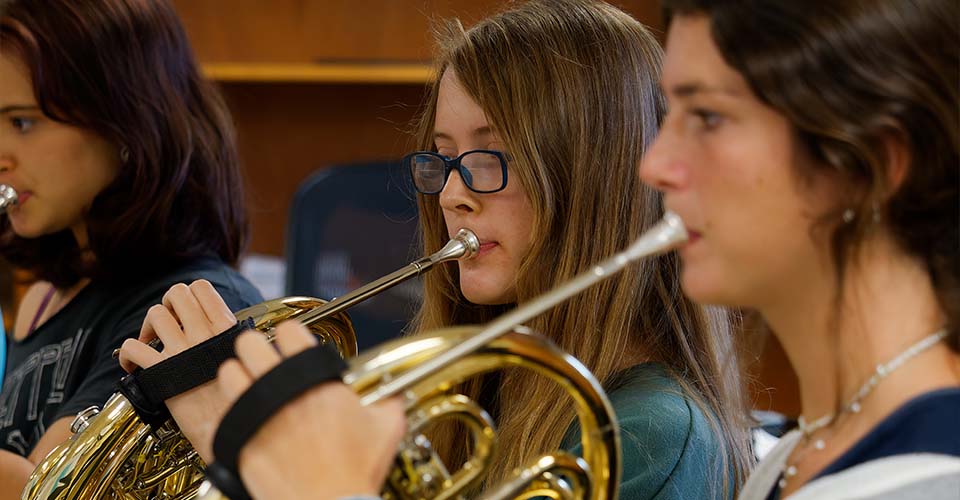
When a student sets a goal to learn a new piece, master a technique, or perform with confidence, they’re doing more than avoiding summer learning loss. They’re building skills, cultivating personal character, and developing process-based learning abilities that will serve them throughout their lives. They’re closing the opportunity gap for themselves and proving that summer can be a time of tremendous growth.
The beauty of music is that it meets students where they are and invites them to imagine where they could go. Whether a child has had years of music in their school or is picking up an instrument for the first time, PMI provides a space to set goals, take risks, and discover something new about themselves.
That’s not just avoiding a slide—that’s taking flight.